"Epoxy" isn't the only way to coat a floor — and in Hawaii's UV, humidity, and salt air, the differences between coating families decide how long your floor actually lasts. Here's the honest comparison.
Serving All of Maui: Kahului, Kihei, Lahaina, Wailuku, Makawao, Pukalani, Paia, Haiku & Upcountry Maui
Get My Free EstimateMost homeowners use "epoxy" as a catch-all word for any garage floor coating. In reality it's one specific chemistry, and it behaves very differently from the newer systems it's often confused with. Understanding the families — epoxy, polyurea, and polyaspartic — is the key to choosing a floor that survives the islands.
Epoxy is a rigid thermoset resin. Indoors, in a shaded, climate-controlled space, it has real strengths: it bonds well to clean concrete, builds a thick, hard film, and it's the most affordable option on the shelf. That's why it's everywhere in mainland garages and big-box store kits.
Hawaii is where epoxy starts to show its limits. The same traits that make it hard also make it brittle, and our climate piles on stress that epoxy wasn't designed for:
None of this means epoxy is "bad." It means epoxy is the wrong tool for an island garage that faces sun, salt air, and constant humidity. For more on epoxy specifically, see our epoxy flooring in Maui page.
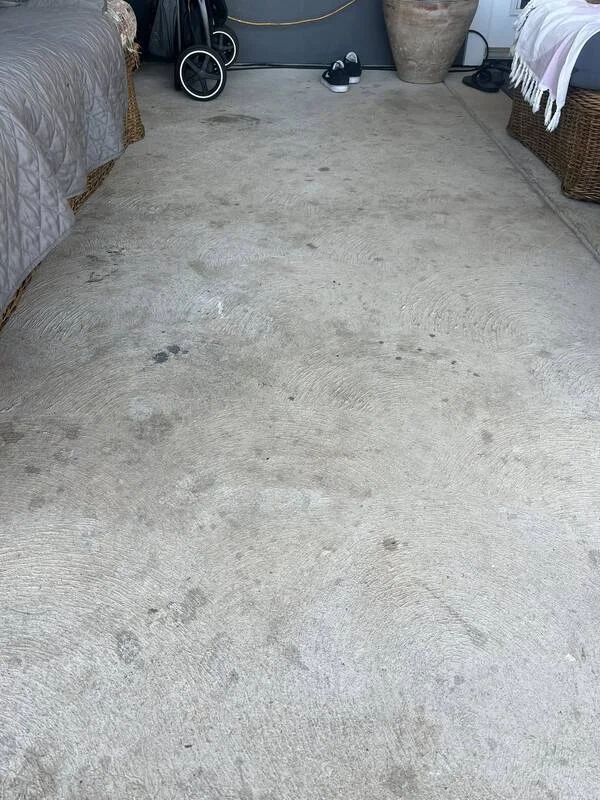
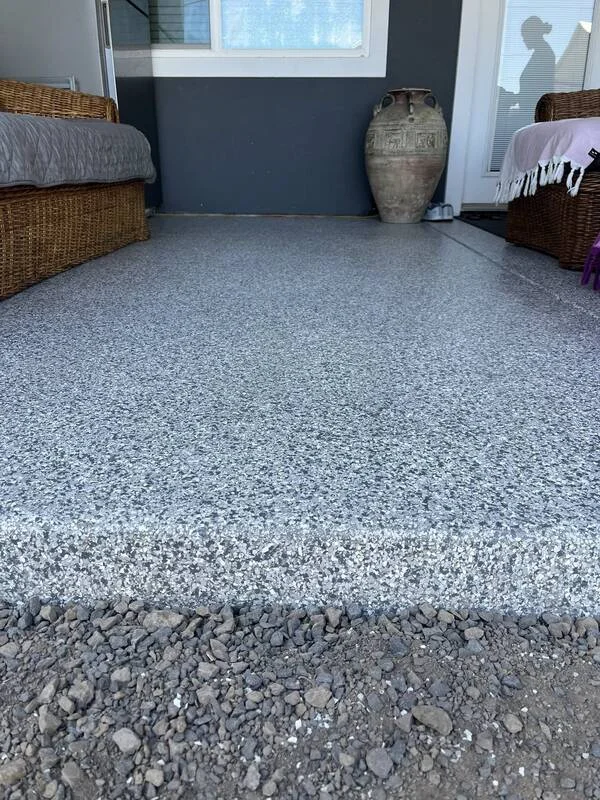
Polyurea and polyaspartic are closely related coatings that were engineered to fix exactly the weaknesses epoxy has. A typical professional system uses a polyurea base coat for adhesion and toughness, then a clear polyaspartic topcoat for UV stability and abrasion resistance. Together they outperform epoxy on nearly every measure that matters in Hawaii:
Learn more about the system on our polyaspartic coatings in Maui page.
Here's how the two approaches compare across the criteria that decide a floor's lifespan in Hawaii. These are qualitative, real-world differences — not lab numbers.
Here's the honest answer. If you have a shaded, climate-controlled indoor slab and a tight budget, a quality epoxy can still do a job. But for the floors most people on Maui actually care about — garages with open doors, driveways, patios, and anything that sees sun, salt air, or temperature swings — polyaspartic and polyurea are the durable choice. They flex instead of cracking, resist UV instead of yellowing, and cure fast enough to install in a single day.
That's exactly why our garage floor coatings use Penntek-certified polyurea and polyaspartic systems rather than basic epoxy. We've put the two head to head in our own polyurea-vs-epoxy performance demonstrations, and the difference in how each handles impact, heat, and abrasion is the reason we stand behind a lifetime residential warranty.
For Hawaii floors, yes. Polyaspartic and polyurea coatings are flexible, UV-stable, and fast-curing, while epoxy is rigid and breaks down under UV and humidity. Epoxy can be a fine budget choice for a shaded indoor slab, but in Maui's sun, salt air, and heat the polyaspartic family typically holds up far longer.
Standard epoxy is UV-sensitive, so over time it tends to amber, yellow, or chalk when exposed to sunlight — and Hawaii has a lot of it. Even in a garage, indirect UV through an open door speeds this up. Polyaspartic topcoats are formulated to stay UV-stable and keep their color and clarity.
Sometimes, but it depends on the condition of the existing epoxy. If the old coating is peeling, ambered, or poorly bonded, the right move is to grind it off and start clean. We diamond-grind the slab to assess the surface and recommend whether a recoat or full removal will give you a lasting result.
In Hawaii's climate, the durability and appearance advantages usually make polyaspartic and polyurea the better long-term value. They resist UV, abrasion, chemicals, and hot-tire pickup, install in a single day, and on our residential systems are backed by a lifetime warranty.
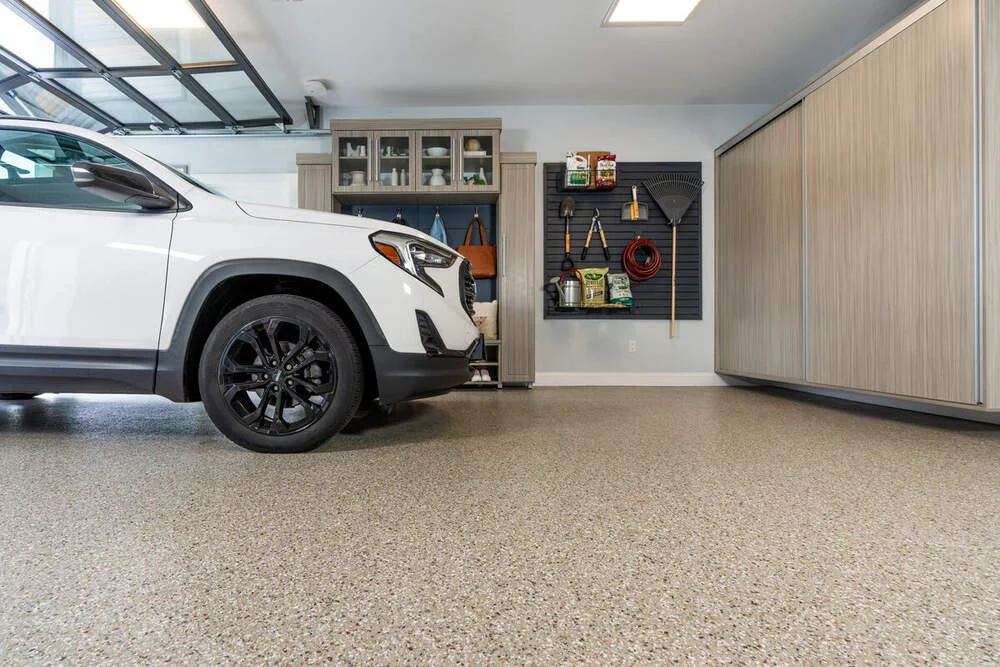
We install Penntek-certified polyurea and polyaspartic systems — not basic epoxy. After diamond-grind prep, we apply a polyurea base coat, broadcast decorative flake, and seal it with a UV-stable polyaspartic topcoat for a one-day, lifetime-warrantied floor built for Maui.
Kahului, HI — serving all of Maui
Monday – Friday: 7AM – 7PM
Saturday: 9 AM–5 PM
Sunday: Closed
Licensed & Insured — Lic# BC-39815